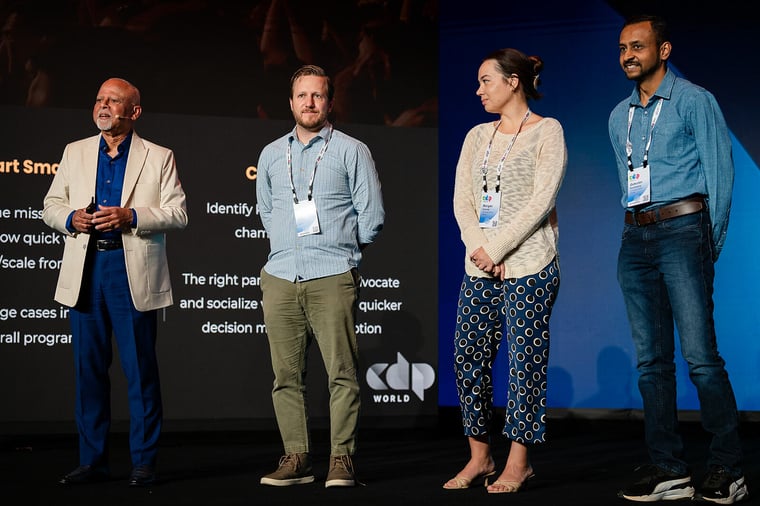
Universal Music Group (UMG) is the largest music company in the world, operating in more than 60 countries worldwide. It is home to artists including the Foo Fighters, the Beatles, Sabrina Carpenter, and Billie Eilish. The company has thousands of artists, millions of fans, and manages many digital touchpoints. But they had a problem: they lacked a unified view of the fan.
UMG wanted to help its artists build stronger relationships with their fans so they could engage more effectively. They needed a better way to understand who their fans were, their preferences and behaviors, and how best to monetize the relationship.
And UMG had access to the data to do that. In addition to managing its music catalog, UMG manages nearly 3,000 artist websites, including all incoming data, as well as the audiences and fans who visit the sites to search for music, download content, and pre-save future releases. The company also manages close to 1,000 artists’ stores on Shopify.
It’s a lot of extraordinarily complex data, said Naras Eechambadi, UMG’s former Global Chief Data and Analytics Officer. They knew a customer data platform (CDP) could help them build a fan ecosystem that unified fan information across web, commerce, events, and other channels, but it wouldn’t be easy.
UMG has a number of music labels, each with its own artists, and they often compete with each other, so the technology solution they chose needed to have stringent data controls on who could access what data. They also had many websites and stores to manage, and it wasn’t always clear who handled each. On top of all this, artists were using numerous text and messaging apps.
Defining what success looks like for a fan ecosystem
Eechambadi said UMG had three key success criteria for capturing and improving fan data. First, they wanted to refine how they market artists to fans and the world. Second, they wanted to grow artists’ audiences, particularly new breakout artists. And third, they wanted artists and marketers to deeply understand their fans and fanbase so they could monetize the relationship effectively.
The process of selecting and implementing a CDP took place over four years. It started with assembling the right team from around the world to ensure all voices were heard. Once that team was in place, the vendor selection journey moved from 20 initial vendors, down to a shortlist of four. After many demos using UMG-provided use cases (some very complex) and personas, UMG ultimately selected Treasure Data. Eechambadi said only the Treasure Data could handle the complexity they faced.
Proving the model before scaling globally
Before rolling out the CDP to the entire company, UMG did an MVP in three territories with quite different needs (France, Canada, and the United States). Once the company felt it was comfortable and competent with the CDP, it began rolling it out across the globe. In mid-2025, UMG finished its CDP rollout to all 60 countries.
Delivering real results for artists, marketers, and the business
Today, there are over 350 CDP users across dozens of countries, and the CDP has been fully embraced. Eechambadi said they now understand their data, and it has been liberating for teams to run campaigns the way they want, when they want.
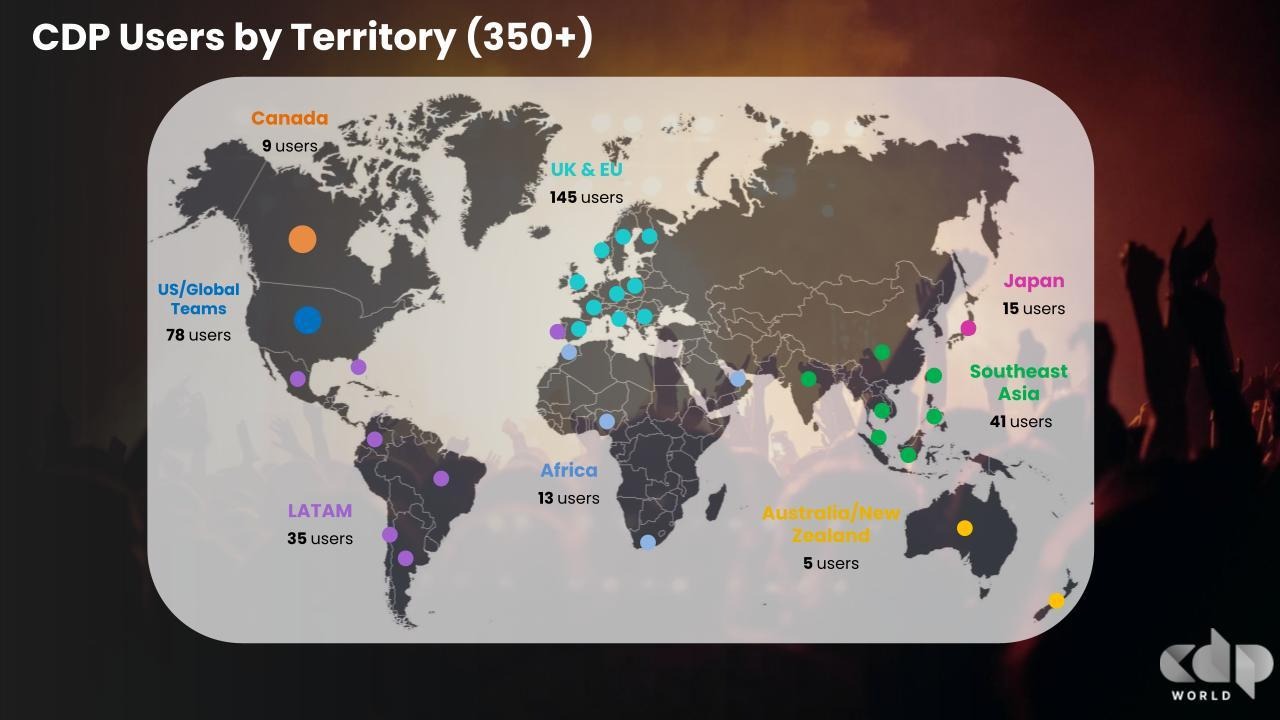
It’s still early, but the results to date have been impressive. UMG has broadened its reach. For example, earlier this year, one artist reached #1 on the Billboard charts and broke Spotify’s single-day streaming record for a female. The German team ran a campaign that helped a key artist reach the top of the charts. And in Japan, where live events are the norm, they are now able to capture fan information attending those events and increase click and open rates.
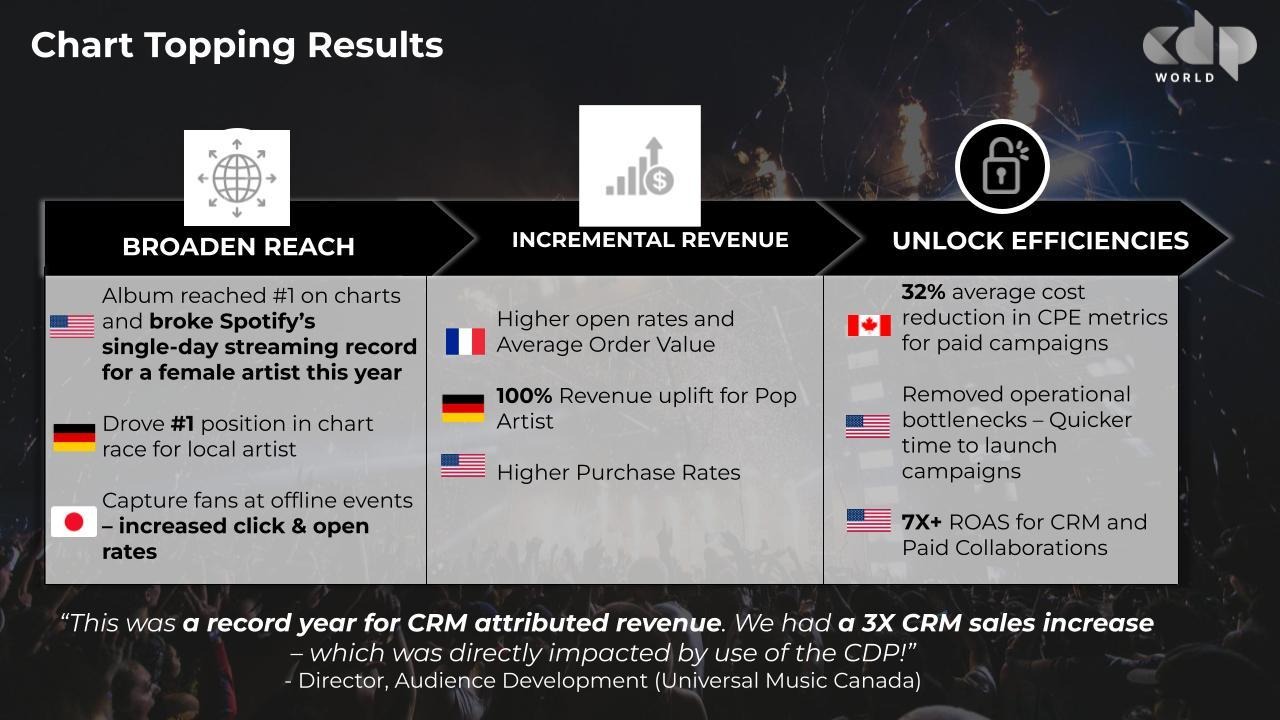
From a revenue perspective, Eechambadi said that with Treasure Data, UMG has seen impressive increases in individual-artist revenue across campaigns and higher purchase rates in the US.
The company has also become more efficient, cutting costs and improving cycle times. In Canada, it achieved a 32% average reduction in CPE (cost per engagement) for paid campaigns. In the US, UMG has removed operational bottlenecks, run campaigns more quickly, and achieved a 7x+ return on ad spend (ROAS) for CRM and Paid Collaborations.
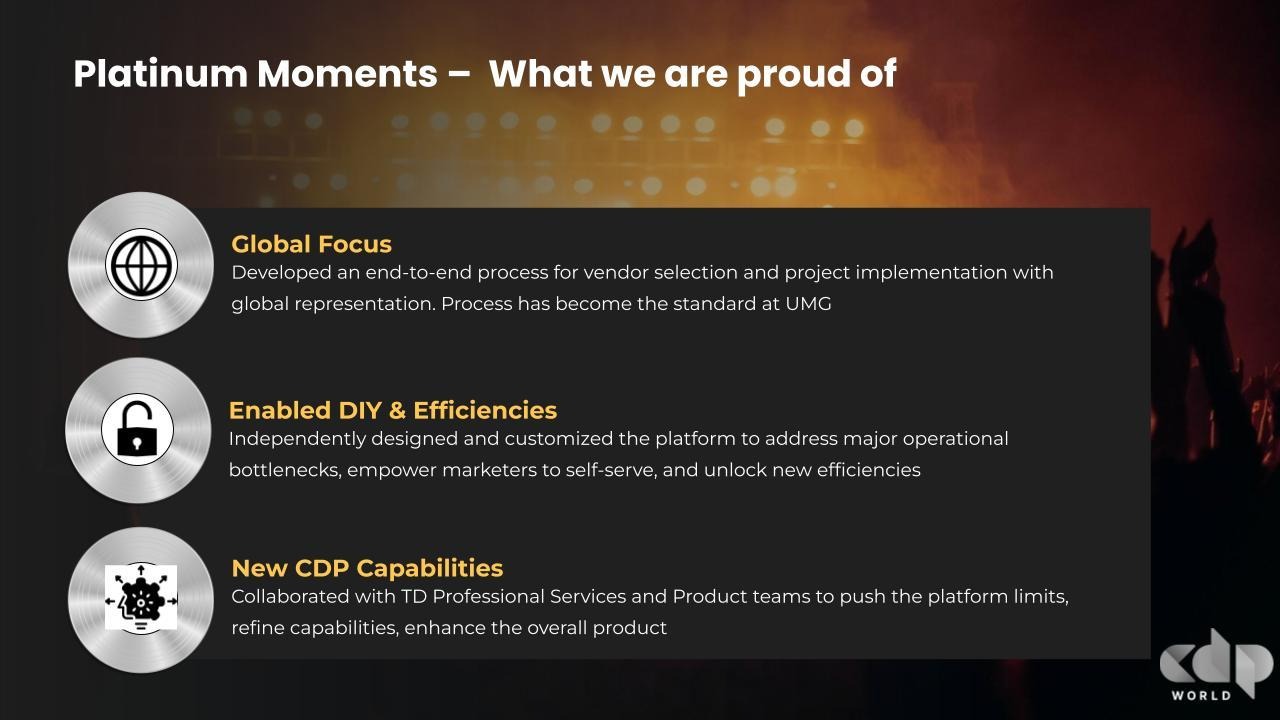
They also partnered with Treasure Data – both product and professional services – to push the envelope a bit to make things happen that were not possible when they started, including some new features Eechambadi said will help other customers.
With this new foundation, Eechambadi said UMG is ready for the AI era.
"And now with [Treasure Data as our data] foundation, we are now ready to embrace the age of AI."
Naras Eechambadi, Former Global Chief Data and Analytics Officer, Universal Music GroupLessons learned from building a global fan ecosystem
Eechambadi said they are most proud of the global reach they’ve achieved, something very few people thought they could do. UMG has empowered marketers to take control of their campaigns without being dependent on IT or a central team.
He offered some advice for other companies on their CDP journey.
- Change is hard; people like their comfort zones. Eechambadi said the real success came from managing that change and dedicating time to training and helping people break old habits and do new things. So invest in your people to drive success.
- Start small. UMG started small and focused on critical use cases, ignoring edge cases.
- Find your champions early. Champions were key to UMG’s success. They believed in what UMG was doing and advocated on its behalf.
Hear more about UMG’s path to a fan ecosystem and watch more from the CDP World 2025 session playlist. And while you’re at it, save the data for Agentic World 2026, hosted by Treasure Data this coming October.