Michaels operates at a massive scale: millions of customers, billions of data points, and countless interactions across digital and physical channels. But even for North America’s largest arts and crafts retailer, turning that data into meaningful personalization wasn’t easy.
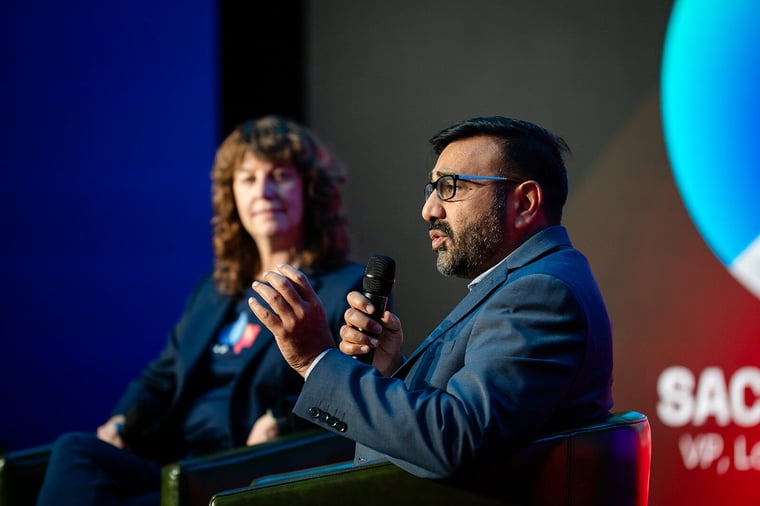
Sachin Shroff, Michaels’ VP of Loyalty, Martech, and CRM, shares how the company selected Treasure Data to bring transparency, speed, and scale to its customer data, and how that foundation now powers personalized journeys that drive engagement and loyalty.
Sachin Shroff is no stranger to using a customer data platform (CDP) at Michaels; the company was already on its second one when it decided it was time for a new one. The decision to move to a new CDP came down to three key goals.
First, the legacy CDP had some black holes that made it difficult to understand how the unification algorithm worked. For Shroff, one of the key components of unification is understanding how you unify customer records to create a golden record. With Treasure Data Intelligent CDP, the unification process was very transparent.
Another goal was speed. In the proof of concept (POC), Michaels provided Treasure Data with five years of data, totaling billions of records. Shroff said he expected to hear back from Treasure Data in a couple of weeks, maybe a month. Instead, he was contacted a couple of days later to review the profiles.
Finally, as technology evolves, costs typically decrease. So, Michaels wanted a CDP that could meet its requirements at a good price.
Michaels didn’t just pick Treasure Data CDP; it went through a very extensive CDP evaluation process. Starting with an independent analyst report, Shroff’s team selected eight of the best-in-class CDPs, created scorecards listing each CDP's features, and had demos.
From there, they narrowed the list to three and requested full POCs using five years of data and demonstrating specific requirements, including unification and speed. Once completed, they looked at the pros and cons of each CDP.
Shroff said no one tool is perfect, but this extensive process allowed them to very clearly understand the strengths of each CDP and which features they were willing to trade off to meet business needs. In the end, Treasure Data was Michaels' CDP of choice, and the company became part of Treasure Data’s CDP Trade-Up program.
The value of personalization has grown, becoming increasingly important to companies like Michaels. Shroff said the CDP allows them to stitch more things together, which is critical because Michaels is getting so many customer signals across various touchpoints.
This is where the CDP really shines, he explained. Not only can it capture all these signals (in-store, online, email, SMS, web, paid media, etc). For Michaels, the investment in the Treasure Data Intelligent CDP wasn't just about addressing their current pain points; it also allows them to scale up and increase marketing productivity.
Michaels started its personalization journey by conducting an experiment. If someone visited the website, they would send them a personalized email based on the product detail page or category page they viewed.
An A/B test found that sending a personalized email to customers who visited the website in the past 30 days increased click rate by 44%. Shroff said you don’t usually get that level of improvement. The problem was that only 6% of Michaels’ customers were on the website in the past 30 days. So this was one segment they could personalize and do well, but what other segments could they also personalize and get similar results?
The post-purchase journey was another segment they decided to personalize. In this case, if someone bought a sewing or Cricut machine, Michaels would personalize their experience by offering lessons online, such as how to use the machine or create different crafts.
Shroff said that to personalize at scale, you have to divide customers into multiple journeys, triggers, and experiments. There’s no one experience that fits all, and that is where the unlocking starts with personalization. The more tests you do, the more magic starts to reveal itself. For Michaels, the magic was more engagement and more sales.
With a solid data foundation in place in the CDP, what’s next for Michaels? Shroff said they are starting to explore using AI models and technologies to help them get more value from their customer data. Shroff wants to personalize on a one-to-one level and believes AI tools will help them get closer.
Shroff also wants to leverage multi-touch attribution and AI to understand how effective their marketing is at driving in-store or online traffic and conversions. With an AI Marketing Cloud, it’s easier to get all those signals and connect the dots.
Finally, Michaels is looking at bringing online personalization beyond email to the web. He described a use case where you send an email based on past purchases or recent visits. A person clicks the email, sees their loyalty points, and goes to the website, where the same experience continues. In the past, email and web had separate data sources, but with Treasure Data, Michaels can use it in real time to power different channels.
Shroff offered a couple of pieces of advice for other companies getting started with, or thinking about, a CDP:
Once you know that, you will know if the CDP is the technology to make that happen.
Another point he made is that nothing takes three or six months anymore. Everything can happen much faster, so once you know what you want to do, look for a CDP that can do it fast.
With Treasure Data in place, Michaels has built a unified data foundation that supports experimentation, real-time activation, and AI-driven decision-making across channels. What started as a need for transparency and speed has evolved into a platform for continuous personalization and measurement.
Interested in learning more from CDP World 2025? Check out the session playlist. And don’t forget to register for Agentic World 2026.