Executive summary
Six Flags, following its merger with Cedar Fair, faced the challenge of unifying two distinct and complex digital ecosystems to deliver a seamless, “frictionless fun” guest experience. Partnering with Merkle and Treasure Data, they implemented a thoughtfully designed customer data platform (CDP) that unified fragmented data and provided real-time guest insights, saving $1 million in tech consolidation.
Building a digital ecosystem around a unified customer profile is often far more complex than it appears at the outset, especially when combining enterprise scale with a business merger. In these conditions, success depends on the right data partners and leadership committed to guiding teams through change.
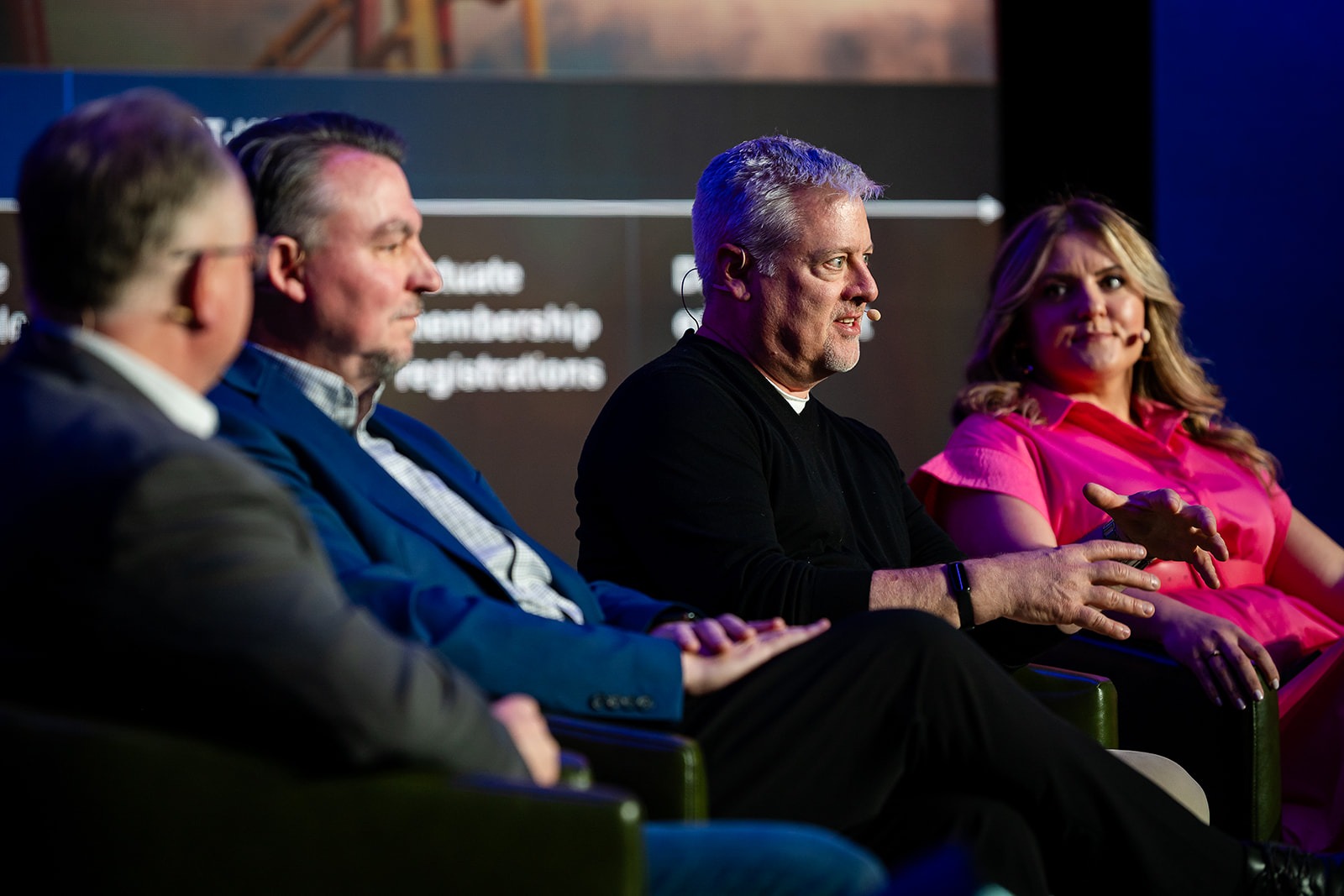
For Six Flags Entertainment Corporation, this journey began with a clear ambition: to deliver a frictionless guest experience. At Treasure Data’s global summit, Jim Denny and Daryle Powers from Six Flags discussed the transformation, while Christine Roux from Merkle explained how Merkle and Treasure Data helped unify fragmented customer data into a system that laid the foundation for real-time experiences.
A merger that exposed the limits of legacy tools
Six Flags operates approximately 42 parks across the United States, Mexico, and Canada, hosting millions of guests every year. But following its merger with Cedar Fair, the company faced a challenge as complex as its most thrilling coasters: unifying two distinct digital ecosystems to deliver a seamless guest experience.
“The integration of the two companies has been much more challenging than I think anyone would have expected,” said Daryle Powers, VP of Marketing at Six Flags.
Merging two multi-billion-dollar enterprises created significant data hurdles. The teams had to reconcile disparate tech stacks, legacy systems, and strategies while maintaining daily operations.
The pursuit of "frictionless fun"
Despite these challenges, the vision remained clear: delivering "frictionless fun" by removing barriers between guests and their enjoyment. Denny, VP of Digital Experience, and his team initially thought their existing CRM and digital ecosystem were sufficient. However, they soon realized traditional tools weren't enough to unify the guest profile across such a complex environment.
“We made some valiant efforts, we made some great strides, and then we found out there's a missing piece. And I think that's when the light bulb came on and we said that we need a CDP,” said Denny.
Enlisting a strategic partner
To navigate this journey, Six Flags partnered with Merkle and Treasure Data as an extension of its team.
Powers emphasized the importance of working with a partner that understands how customer data is activated across marketing, web, and ecommerce teams. This cross-functional perspective keeps the work moving, so decisions do not stall between marketing, web, and ecommerce teams.
With Treasure Data, Six Flags achieved rapid implementation, seamlessly integrating data and AI solutions in under three months. Additionally, the partnership unlocked over $1 million in cost savings through tech consolidation, helping Six Flags maximize efficiency and streamline operations.
Future-state marketing architecture: A recipe for success
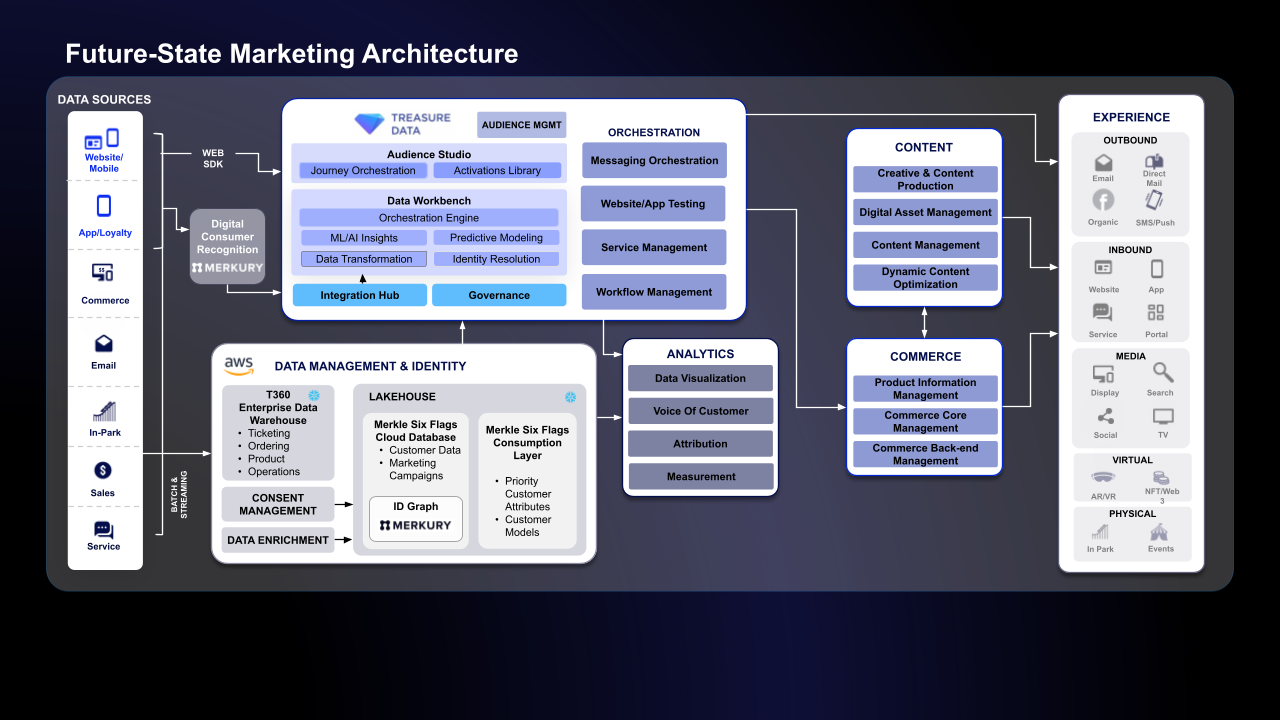
To demonstrate how the new data architecture functions, Christine Roux, Account Director at Merkle, used the example of a restaurant kitchen.
• The pantry: The data lake (in this case, Snowflake) acts as the pantry, holding every raw ingredient (enterprise data) the business might need.
• The prep station: A "consumption layer" slices, dices, and aggregates the data, prepping it so it is ready for use.
• The service window: Treasure Data Intelligent CDP sits on top of the consumption layer to orchestrate and activate the prepared data, deciding which message, offer, or experience to deliver to each guest in the moment and across channels.
Bringing two worlds together
For Denny, the ultimate value of Treasure Data lies in connecting the guest experience with the employee experience. When associates have the right data at the right moment, it’s so much easier to resolve friction.
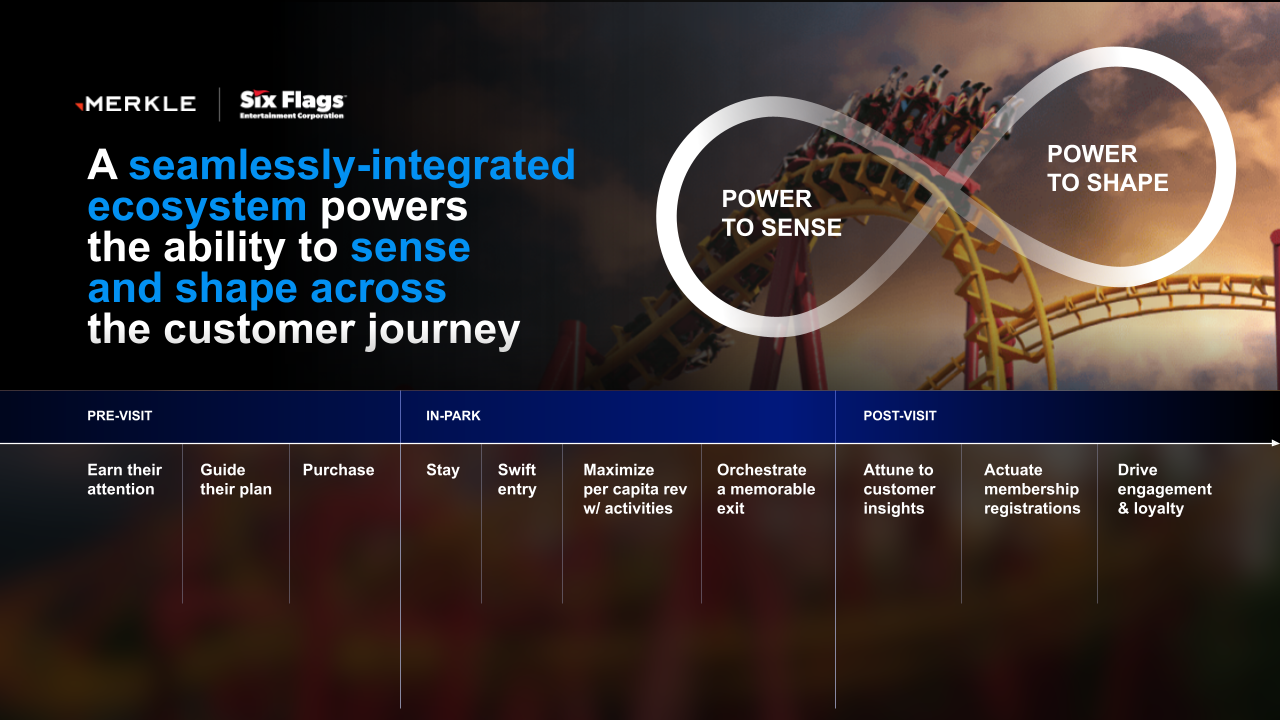
“I see a CDP as a win for our guests and the personalization we can do to make their lives easier,” Denny said. “But it’s also for the associates on the other side, those guest services teams. When someone walks up, they’ll have the information they need in the moment. I look forward to bringing these two worlds together, and I think it will deliver an experience like we’ve never thought about before.”
Six Flags is building on the trusted data foundation of their CDP by organizing assets and data to enable smarter segmentation and more personalized experiences. Next, the team plans to activate this data and leverage AI-driven capabilities like natural language querying and campaign creation through the Treasure Engagement AI Suite. Read the full case study for more details on Six Flags’ journey.
For more insights from martech leaders, watch the CDP World 2025 session playlist and save the date for Agentic World 2026.