Executive summary
Extraco Banks, a Texas-based community bank, leveraged Treasure Data to unify customer data and achieve significant business outcomes, including a 27% increase in campaign conversion rates and $63.6 million in added earning assets in 2025. By democratizing data access and implementing Treasure Data’s AI Agent Foundry, Extraco empowered teams across the organization with actionable insights via natural language queries.
You can have all the customer data in the world, but to unlock its true value across the organization, you have to unify it and then implement solutions that leverage it. This is the challenge that Extraco Banks, a privately held community bank in Texas with more than $2.5 billion in assets, faced. Offering a wide range of products, Extraco faced significant operational complexity, including managing 44 disparate data sources across eight lines of business, manual customer segmentation, and working with data that was neither standardized nor normalized.
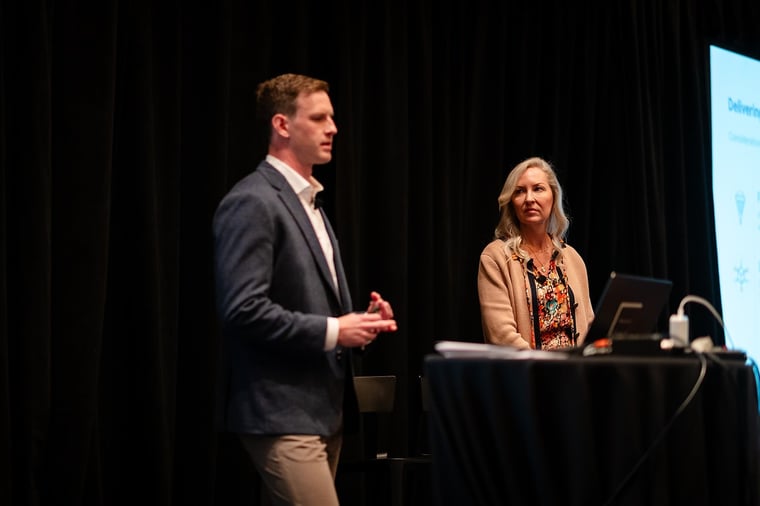
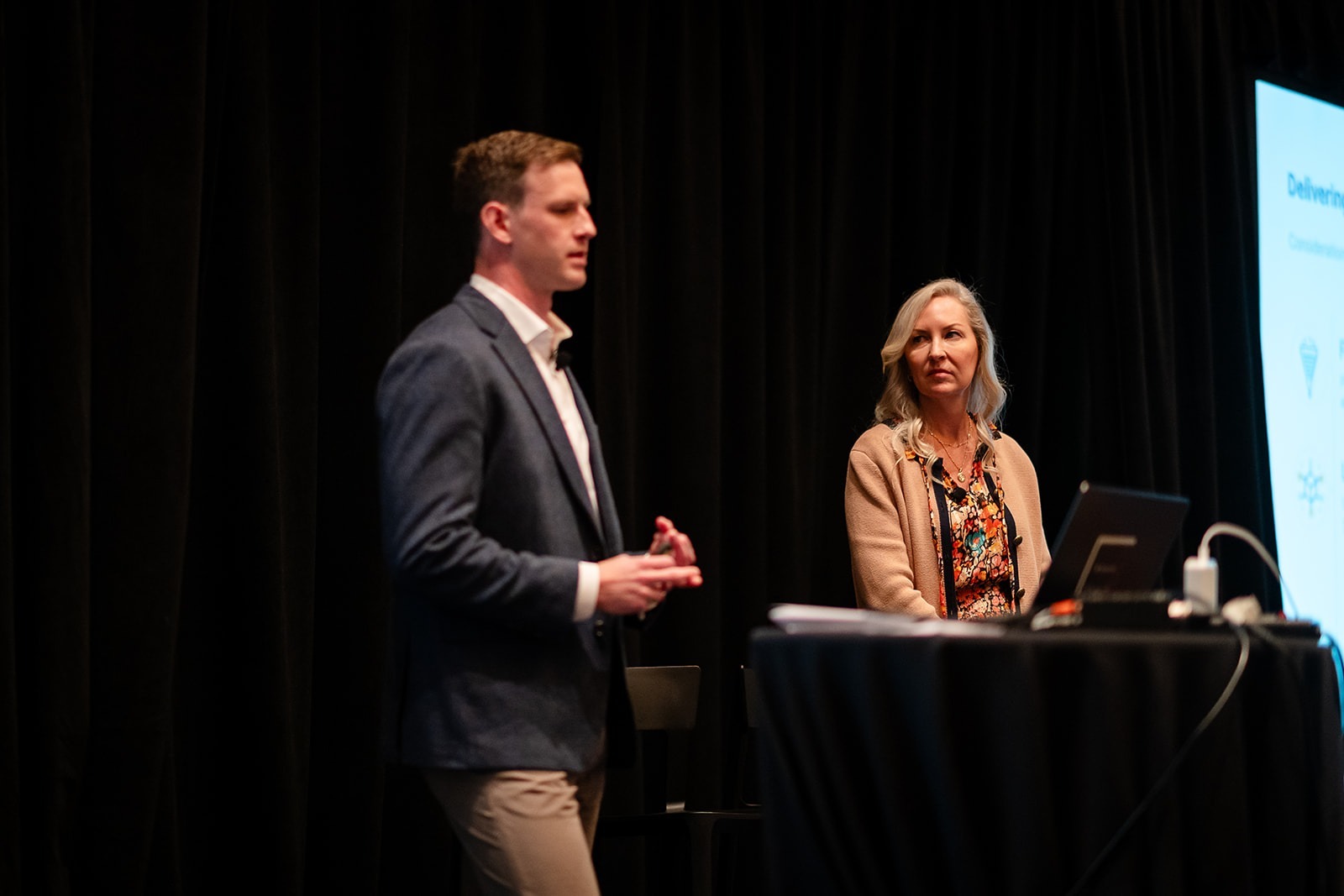
In the CDP World 2025 session, Beyond Marketing: Unlocking CDP Value with Agentic AI, Libby Cain, Executive VP and Director of Marketing Strategy and Data Intelligence at Extraco Banks, shared the challenges Extraco faced and the business goals it wanted to achieve when it kicked off a three-year plan that includes Treasure Data as its cornerstone.
The driving force for a customer data platform (CDP)
Extraco had four main goals it wanted to achieve when it started:
- Unify customer data to create a single golden record (single customer view).
- Leverage those data assets to improve customer experience, increase revenue, and strengthen customer relationships.
- Democratize access to customer data, giving line of business (LOB) leaders access to real-time analytics and insights.
- Create a tech stack that prepares the company for future opportunities.
Since implementing Treasure Data Intelligent CDP, Extaco Banks has ingested 15 data sources and created 60,000 unified profiles. The company has seen a 27% year-over-year increase in campaign conversion rates and now runs regular marketing sprints, continuously iterating and launching new campaigns. In 2025,the company added nearly $64 million in earning assets to the balance sheet.
But things were just getting started.
Democratizing data with the help of agentic AI
Extraco had created this trustworthy dataset for marketing, but now they wanted to achieve the goal of democratizing that data for other parts of the business.
Cain wondered: what if they could enable business leaders to query customer data in natural language without requiring access to the CDP?
Extraco Banks worked with Infoverity, an enterprise data management consultancy and Treasure Data partner, on the project. Brandon Moore, Associate Director at Infoverity, said they learned about Treasure Data’s AI Agent Foundry and felt a proof of concept (POC) would allow them to test using agentic AI to give teams beyond marketing access to customer data.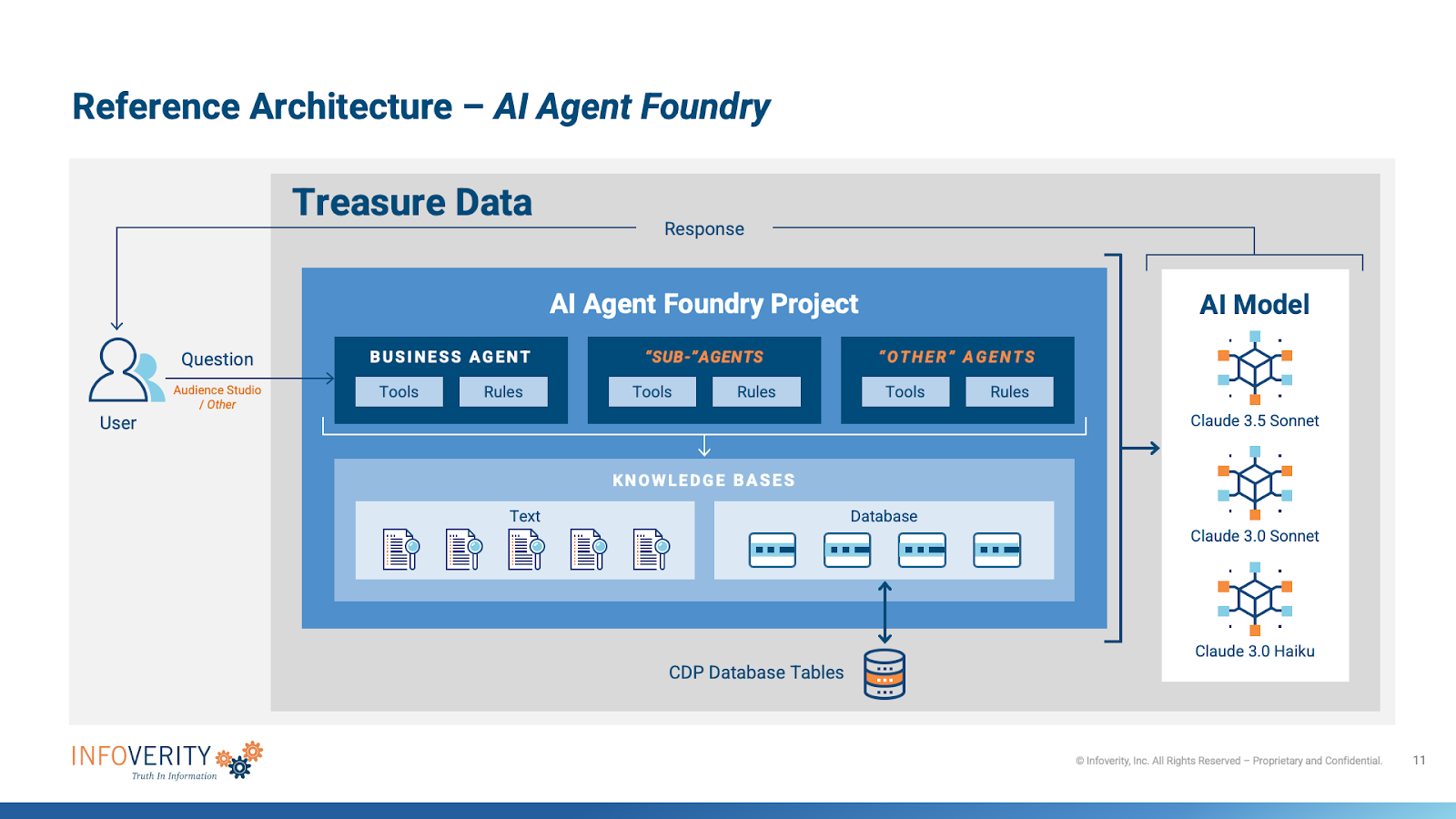
The Business Agent was born.
Building an agentic AI MVP (minimum viable product)
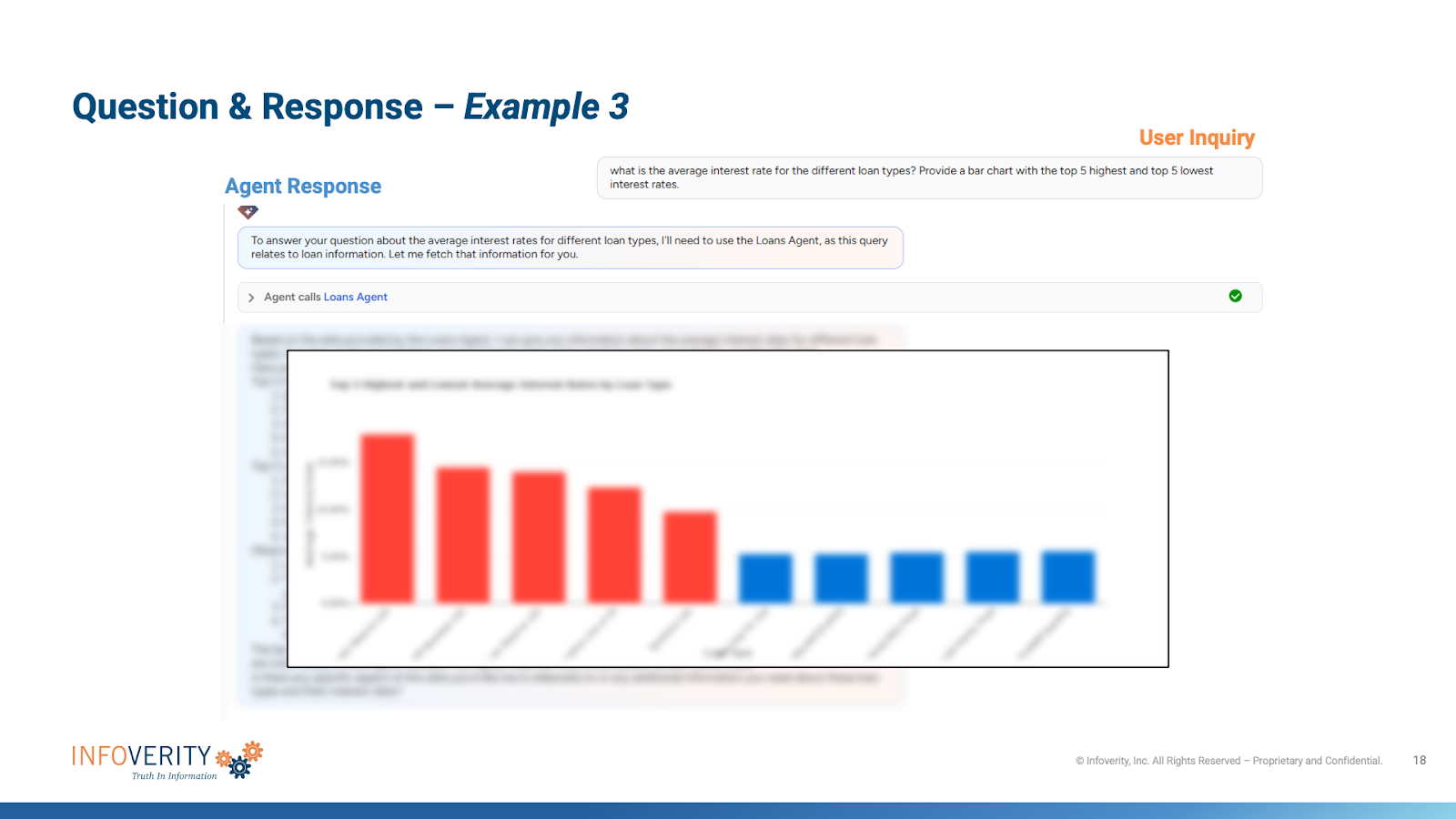
The Business Agent POC focused on a primary set of data: loans and transactions. There were several requirements: the Agent must be self-serve; provide validated, accurate results with an audit trail showing the process and steps the Agent took to answer a question; and consistently follow the same process to ensure meaningful, accurate results.
The other key requirement was flexibility. This was version 1.0 of the Business Agent, and they wanted the ability to introduce new datasets and take on new use cases as they learned and grew.
The Business Agent is like a quarterback, routing requests to underlying agents (in this case, a loans agent and a transactions agent). The Agent also includes instructions on how agents should work, detailed company information, and CDP data. They realized early on that they were building an AI-powered system, not the underlying AI model.
Lessons learned implementing an AI agent
From an implementation process perspective, Moore said it’s important to define what you want to accomplish within the lens of the data you have available. You also need to define your end users and understand how you will operationalize the agent and integrate it into their daily workflows. He said you also need to set clear, black-and-white stage gates so it’s clear when something is ready to go into production. Otherwise, you’ll find your project delayed by scope creep or the dreaded perfection mindset.
Moore also mentioned considering retrieval augmented generation (RAG) in your agent design. RAG is your own information database that you share with your model to help it better understand your data and determine when and how to respond to a query.
Another area you should spend significant time on is validation. Moore said to conduct extensive testing and fine-tune the agent’s logic to ensure it returns the right response when you put the agent in front of your end users. Cain noted that your users should not be validating the agent; they should be using it. You should also train your users and watch how they use the agent to ensure it’s operationalized into the business. As it’s used, build a backlog of requests and new use cases for future updates.
The session wrapped with several recommendations from Cain and Moore to keep in mind when you begin your own AI agent project, which we can organize into three key themes: scope, trust, and adoption.
Scope: Focus on proven use cases. High-volume, repeatable tasks with a narrow application work best (e.g., automation and the reduction of manual effort). Keep it simple to show value quickly. And make sure you’re working with validated, trustworthy data (remember: garbage in, garbage out).
Trust: Governance may be table stakes, but it’s even more important to talk about. Every agent action should be traceable, auditable, and explainable. The agent should also only have access to the data it needs.
Adoption: Foster organizational change by involving end users in the POC or the model creation process. Get their feedback early on to see how they would use it in real time, and how it could affect your existing processes. Also, there will be gaps in how much your people know about agentic AI, and it will be important to bridge these gaps to ensure everyone benefits.
From CDP foundation to intelligent access
Marketing and customer experience teams have long recognized the value of a CDP, but the truth is, every part of the organization benefits from having access to unified, accurate customer data. When combined with a CDP, agentic AI becomes an accelerator, democratizing that access. Extraco Banks’ story is a model for moving from insight to action at scale - something every organization wants to achieve.
Hear more about Extraco’s story, along with other great sessions from CDP World 2025. The full session list is here. And while you’re at it, save the data for Agentic World 2026, hosted by Treasure Data this coming October.