


Whether you are just beginning your data journey, or gaining momentum in making data-based decisions, applying a customer data maturity model can help you identify where you're getting the most from your data and strategies, and how to improve your processes and data insights.
What is Customer Data Maturity?
Customer data maturity is defined as the extent to which an organization is maximizing the use of their customer data. The ultimate goal is to incorporate customer data into all of your decision making and practices. In the process, your customer data transforms from scattered insights, to a source of information that serves as a driver for decision making.
How Does a Customer Data Maturity Model Help Define CDP Use Cases?
Using a maturity model to measure the sophistication of your customer data management operations can help you identify goals, challenges, and prescriptive actions to take as you prioritize CDP use cases and build your CDP roadmap. These goals and prescriptive actions allow you to focus on gaining valuable results strategically by focusing on both short-term wins, and long-term gains at scale. As the saying goes–you can't run until you can walk. The same goes for digital transformation. For example, before you can take on more complicated CDP use cases, or layer on additional capabilities–like artificial intelligence (AI), machine learning (ML) and predictive analytics, you must first have the foundational pieces of data management in place. Focusing on the right CDP use cases at the right times gives you the opportunity to see more immediate time to value, while setting your organization up for long-term success.With the right planning, seeing value from your CDP investment can be pretty swift. According to research from Treasure Data and Advertiser Perceptions, a majority of organizations that adopt a CDP begin to see value in eight months, on average.Business leaders also recognize the future value that CDPs can bring as their organization continues to increase data maturity, and introduces more complex CDP use cases across the organization. According to the report (see Figure 1), these future gains are especially notable when it comes to applying AI and ML, improved marketing and IT efficiency, and the ability to build and optimize their first-party data strategy.
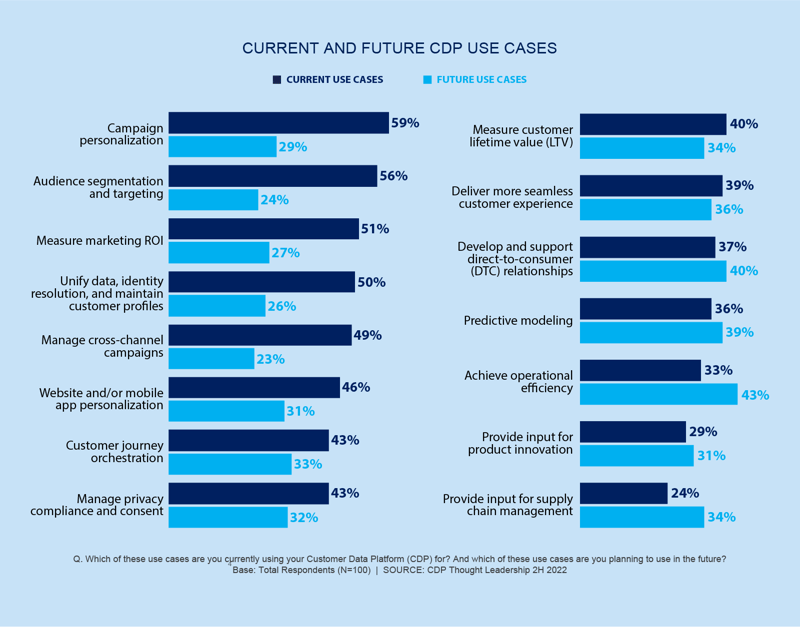 Figure 1. Current and Future CDP Use Cases, Advertiser Perceptions.
The Stages of Data Maturity
At Treasure Data, we have developed a customer data maturity model (Figure 2) that can help you understand where your organization is when using customer data to make key decisions. This model will also help you identify how to prioritize the right CDP use cases based on your level of data maturity, and how to use your data to create a competitive edge for your business in a way that's scalable and secure. 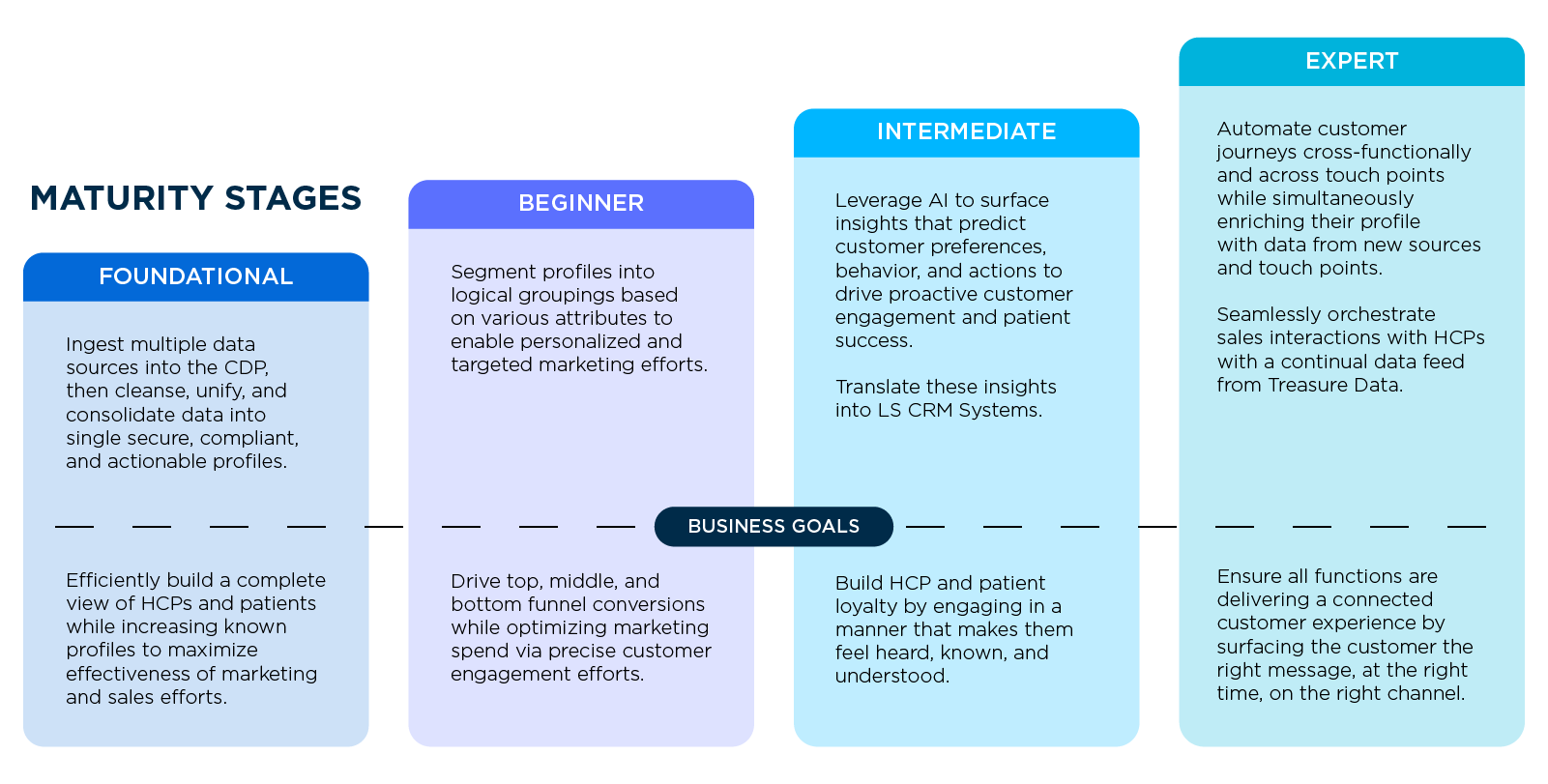 CDP Use Case Guide, which includes a closer look at different CDP use cases that you can apply across marketing, sales, customer service, and operations. You can also schedule a consultation with one of our experts to explore the use cases that will drive the most impact for your organization.

.jpeg?width=450&height=250&name=AdobeStock_1102065649%20(1).jpeg)